.webp)

The best pickleball paddles for women typically weigh 7.0-7.6 oz, have a grip size of 4"- 4¼", and use a fiberglass or carbon fiber face depending on skill level. There's no functional difference between "men's" and "women's" paddles - no manufacturer builds different core technology by gender. The right choice depends on hand size, playing style, and strength, not a gender-specific product category.
If you've searched this phrase expecting a genuinely different type of equipment, here's the honest answer: there isn't one. What actually matters - weight, grip size, and core/face material - applies to any player, and this guide walks through how to choose based on what actually affects your game.
Are there actual differences between men's and women's pickleball paddles?
No manufacturer produces a paddle with different core technology, face material, or construction based on gender. When you see a paddle marketed "for women," it typically just means a lighter weight option or a smaller default grip size - specs that any player with smaller hands or a preference for maneuverability over raw power would also benefit from, regardless of gender.
This matters because it changes how you should shop: instead of looking for a "women's" category, you're better served looking directly at weight, grip size, and core/face construction - the same specs that determine performance for every player.
Is it wrong to buy a "men's" paddle? No - there's no such official category. "Men's" and "women's" paddle marketing is a retail framing convention, not a technical specification. A paddle labeled either way with the same weight, grip size, and core construction will perform identically in your hand. If a "men's" paddle happens to have the exact weight and grip size that suits you, there's no functional reason to avoid it.
What paddle weight is right for smaller hands or lower upper-body strength?
Lighter paddles, typically 7.0–7.6 oz, offer faster maneuverability and reduce wrist and shoulder fatigue - a genuine advantage for players prioritizing quick hands and reaction speed over raw power. This is a common preference among many women players, but it's equally relevant for older players, beginners still building racket-sport strength, or anyone managing wrist or elbow sensitivity.
Here's how weight actually trades off:
Practical guidance: if you're newer to racket sports, prioritize the lighter end of the range while you build technique and racket-sport-specific strength. You can always move toward a slightly heavier paddle later as your swing develops - but starting too heavy risks early fatigue and poor habits compensating for a paddle that's harder to control. A common mistake is assuming heavier automatically means better performance; in reality, a paddle that's too heavy for your current strength level often produces worse results than a lighter one, simply because fatigue sets in faster and shot consistency drops over the course of a match.
What grip size works best for most women players?
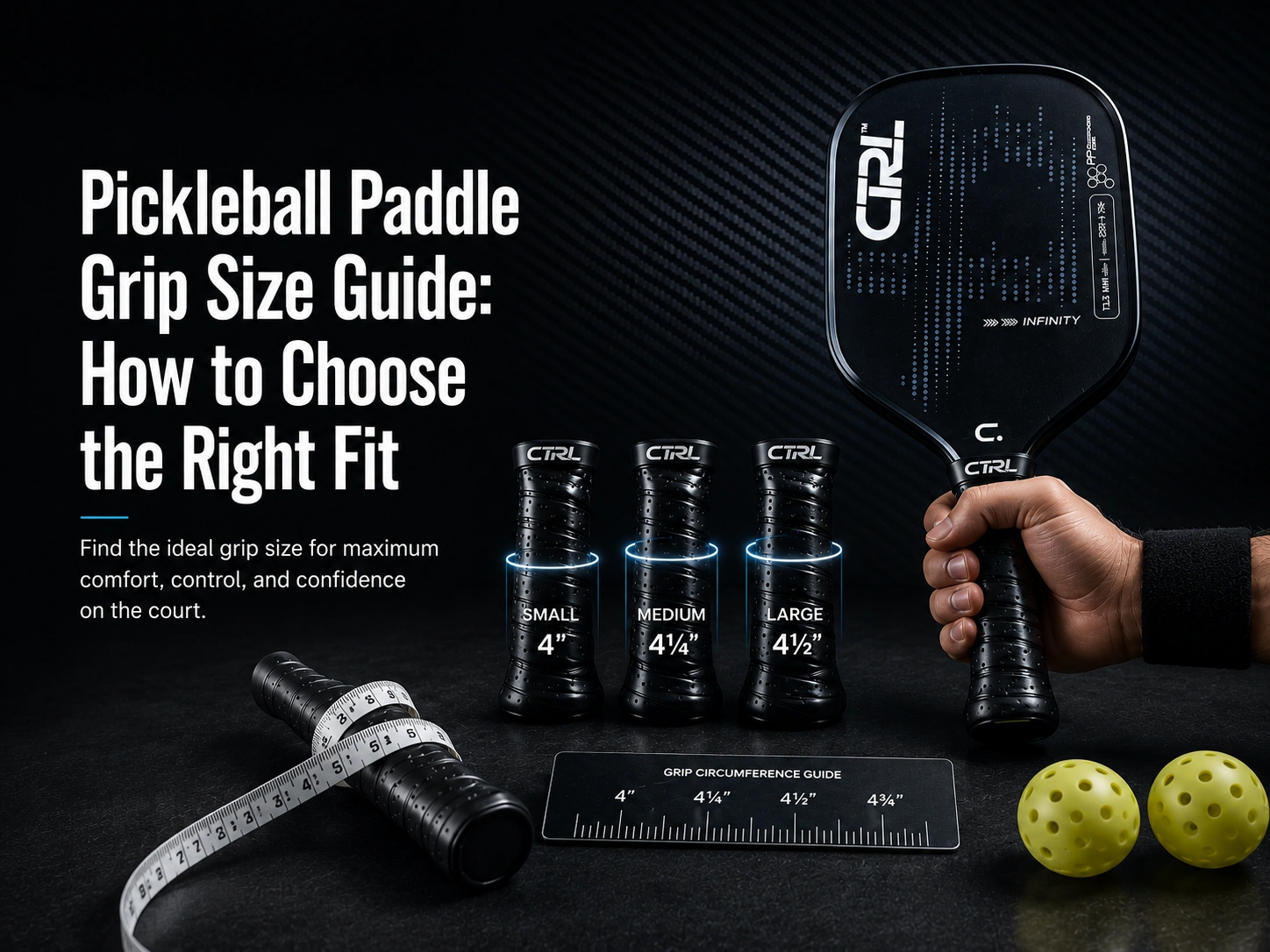
Most women players fall into the 4"–4¼" grip circumference range, which is on the smaller end of the standard sizing chart but not a separate category - plenty of players of any gender fall into this same range based on hand size alone.
Getting grip size right matters more than most buyers realize: a grip that's too large restricts wrist snap and reduces control on dinks and soft shots, while a grip that's too small forces over-gripping, which leads to fatigue and potential wrist strain over time. For the full measurement method and sizing chart, see our Pickleball Paddle Grip Size Guide - the process is identical regardless of gender, based purely on your hand measurement.
Should you prioritize control-focused or power-focused paddles?
This depends entirely on your individual playing style, not gender. Control-focused paddles - typically featuring a thicker core (14–16mm) and a softer polymer material - suit players who favor dink-heavy, net-focused play and want maximum touch on soft shots. Power-focused paddles - often with a thinner core (11–13mm) and a stiffer face - suit players who prefer driving from the baseline and generating pace on their shots.
Neither style is inherently "better suited" to any gender. The honest way to decide is to think about how you actually play:
- If you find yourself winning points at the net through soft dinks and resets → lean toward a control-focused paddle
- If you find yourself winning points through powerful groundstrokes and put-aways → lean toward a power-focused paddle
- If you're not sure yet because you're new to the sport → start with a balanced mid-weight, mid-core-thickness paddle and let your natural style emerge over your first few months of play
For a deeper technical breakdown of how core material affects this trade-off specifically, see our Core Materials Explained guide.
What are the best lightweight paddle options for beginners?
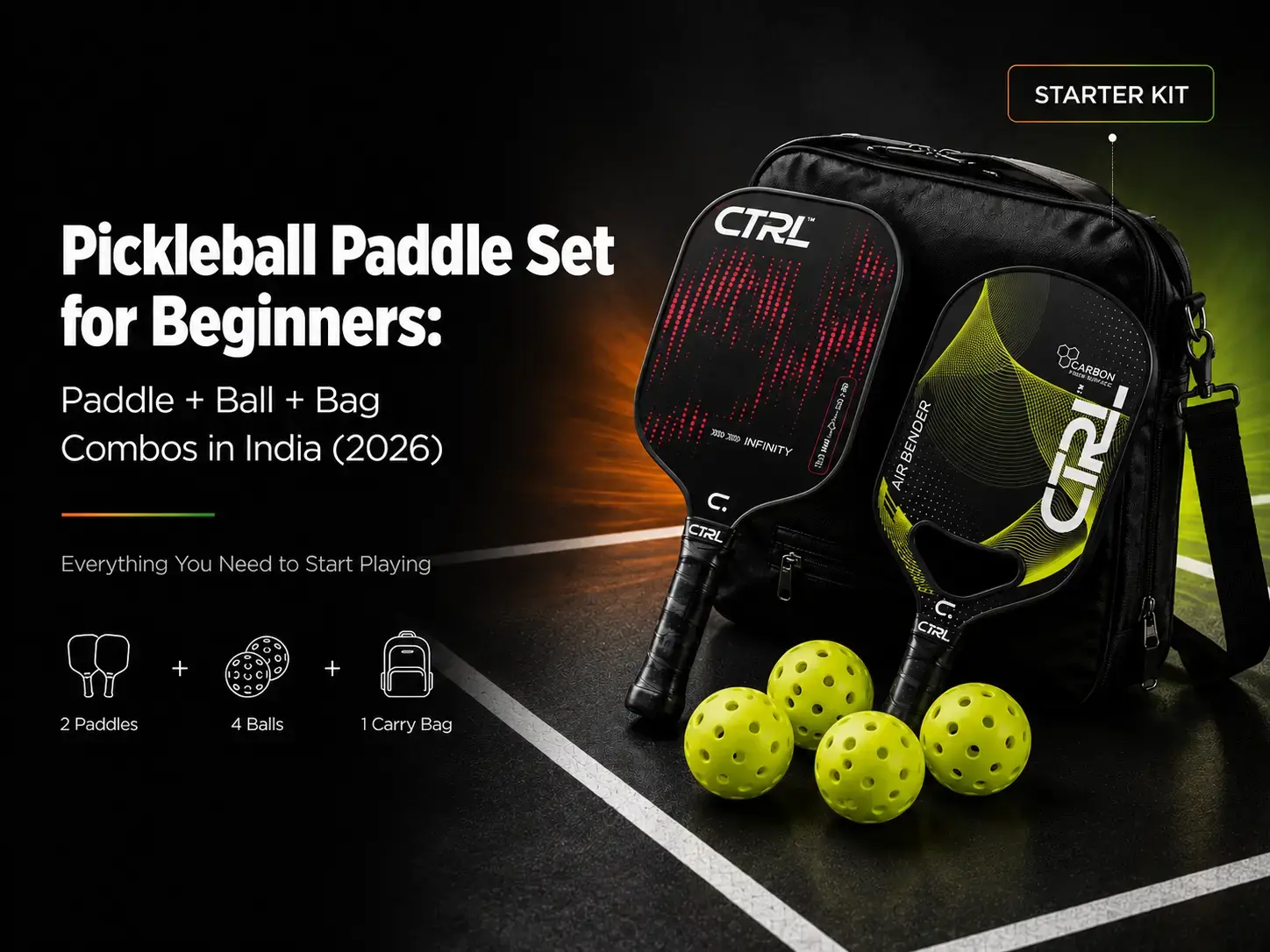
For beginners prioritizing a lightweight, forgiving paddle, look for options in the 7.0–7.5 oz range with a fiberglass or composite face and a moderate 4"–4¼" grip - this combination minimizes fatigue while you're learning proper technique, without sacrificing enough power to make rallies frustrating.
The CTRL Infinity is built around exactly this profile: a lightweight, beginner-friendly construction designed to support players developing consistency before they need the added performance ceiling of a premium carbon fiber paddle. It's a sensible starting point whether you're brand new to racket sports entirely or transitioning from another sport like badminton or tennis.
If you're ready to compare specific models by weight, grip, and price, our Best Pickleball Rackets in India 2026 Price Guide covers the full range across every budget.
Shop CTRL Lightweight Paddles →
How does climate and playing frequency in India affect paddle choice?
India's heat and humidity affect grip comfort and paddle durability in ways worth factoring into your choice, regardless of gender. Longer, sweatier sessions during summer months make a moisture-wicking or tackier grip material genuinely useful - a cheap, smooth grip becomes noticeably harder to control as hands sweat, which affects control precision on soft shots more than it affects power on drives.
Playing frequency matters too. Someone playing twice a week casually has different priorities than someone playing daily at a competitive club level:
- 1–2 times/week (casual/social): a lightweight, forgiving entry-to-mid-range paddle is more than sufficient - durability concerns are less pressing at lower usage
- 3–5 times/week (regular/fitness-focused): a mid-range paddle with better core durability becomes worthwhile, since the core will see meaningfully more repeated impact over a shorter time span
- Daily/competitive play: premium construction pays for itself faster at this frequency, both in performance and in avoiding the mid-season performance drop-off that lower-tier cores experience under heavy use
None of this changes based on gender - it's purely a function of how often and how intensely you're actually playing.
What should you do if you're switching from another racket sport?
Players transitioning from badminton or tennis often default to habits that don't translate cleanly to pickleball, and paddle choice can either help or hinder that adjustment. Badminton players are used to a very light racket and quick wrist action, which can lead to over-swinging with a pickleball paddle if it's too heavy. Tennis players are used to generating power through a strung racket face and full swing, which doesn't translate directly to a solid-faced paddle's shorter, more compact stroke.
If you're coming from badminton, a lighter paddle (7.0–7.4 oz) will feel more familiar initially and ease the transition. If you're coming from tennis, resist the instinct to swing as hard as you would with a strung racket - a mid-weight, control-oriented paddle will help you recalibrate to pickleball's shorter, more controlled stroke pattern faster than a power-focused paddle will.
This transition guidance applies identically whether you're male or female - it's about your prior racket-sport background, not a gendered starting point.