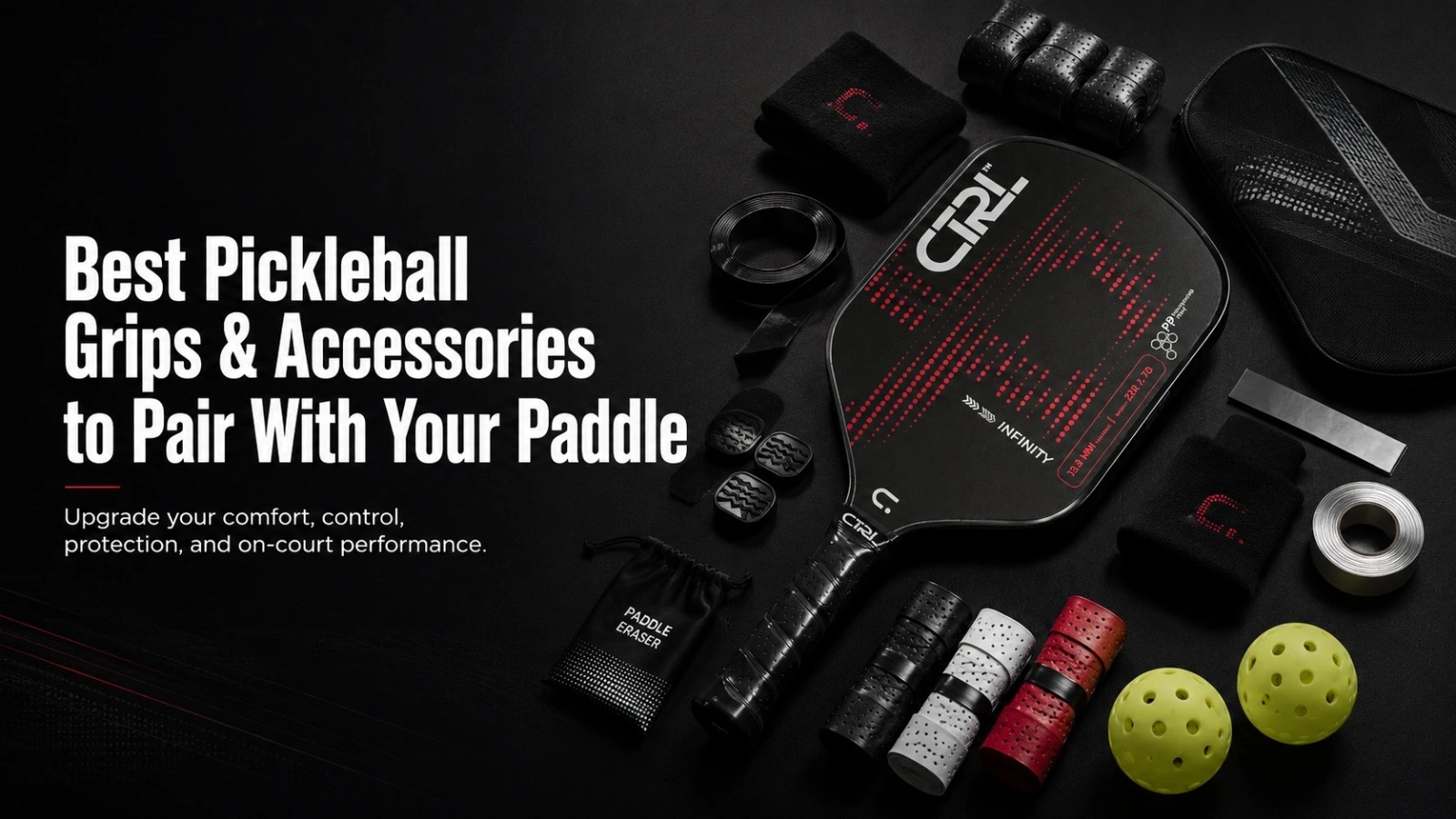
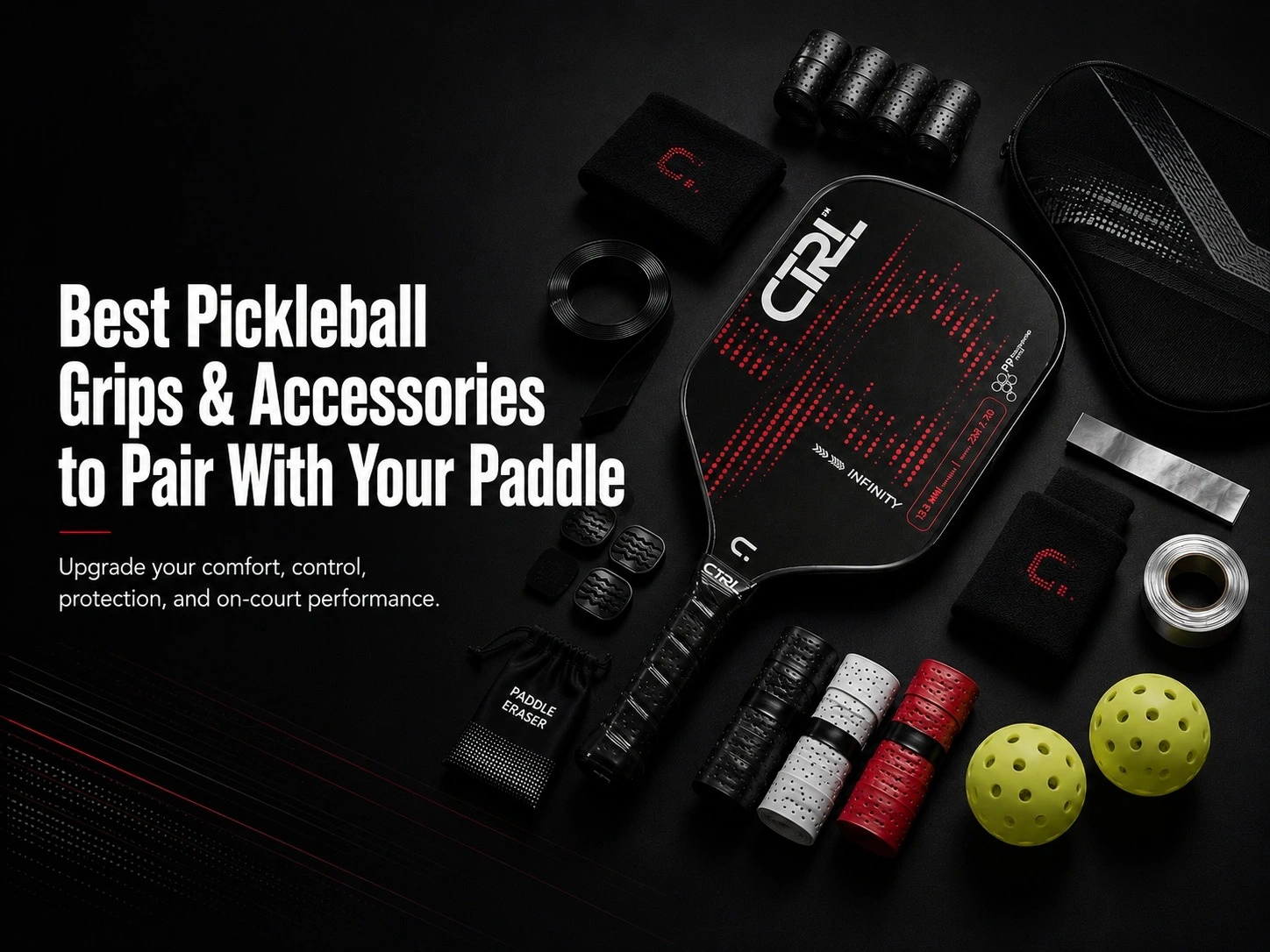
The essential pickleball accessories to pair with your paddle are an overgrip, a paddle cover or bag, extra pickleballs, and a grip-drying towel. Together these cost roughly ₹500–₹1,500 and meaningfully extend your paddle's life while improving comfort and control during play.
None of them are optional extras once you're playing regularly - they're the difference between a paddle that performs well for years and one that degrades faster than it should. If you've just bought a paddle and are wondering what else you actually need, this guide breaks down what matters, what's optional, and what it should realistically cost.
What is a pickleball overgrip and do you actually need one?
An overgrip is a thin, replaceable wrap applied over a paddle's factory grip to improve tackiness, absorb sweat, and slightly adjust grip size. It's one of the cheapest accessories you can buy and arguably has the highest impact-to-cost ratio of anything on this list. A fresh overgrip can transform how a paddle feels in hand for the cost of a coffee.
For players in India specifically, an overgrip isn't really optional if you're playing regularly. Factory grips, even good ones, tend to become slick within a single session once heat and humidity are in play - and a slick grip forces you to squeeze harder to maintain control, which is exactly the over-gripping pattern that sports-medicine research links to wrist and elbow strain in racket sports.
What types of pickleball overgrips are there?
Overgrips fall into a few broad categories, and the right one depends on how much you sweat and the feel you prefer:
- Tacky overgrips have a sticky surface that maximizes grip security and control. They're the most popular choice for players who prioritize a locked-in feel, though the tack fades as the grip wears.
- Cushioned (comfort) overgrips are slightly thicker and softer, absorbing shock and reducing hand fatigue over long sessions - a good pick if you feel vibration or play for hours at a stretch.
- Perforated overgrips have small holes to channel away sweat, making them well suited to hot, humid Indian conditions where moisture is the main enemy of grip.
- Smooth (non-perforated) overgrips offer a cleaner, drier feel and are easy to apply, but manage sweat less aggressively than perforated versions.
If you sweat heavily or play outdoors in the heat, a tacky perforated overgrip is usually the safest first choice.
Does an overgrip replace the factory grip?
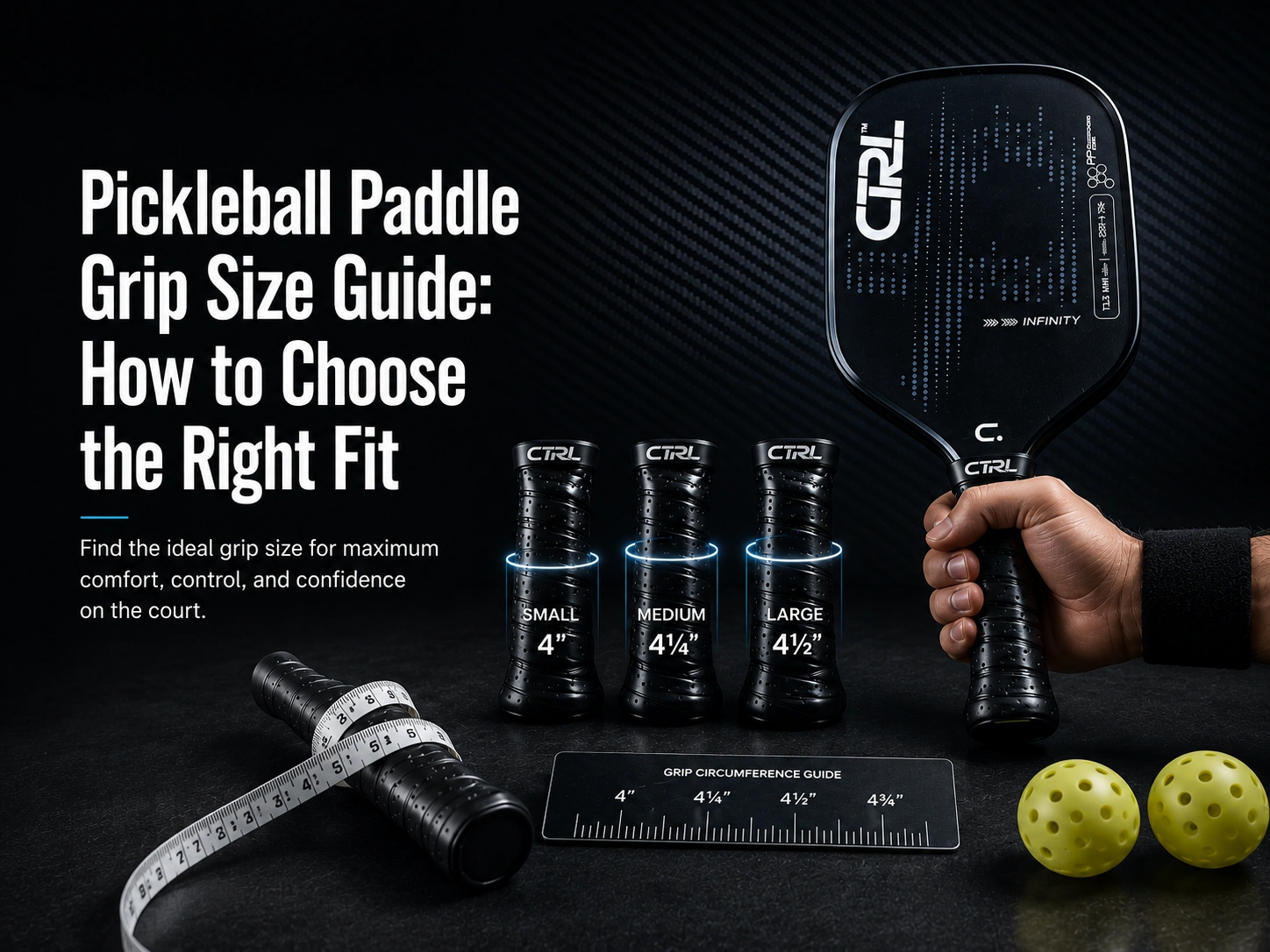
No - it wraps over the existing factory grip and is replaced independently, without needing to replace the whole handle. This is also how you can adjust grip size upward by roughly ⅛ inch if you're between standard sizes, a technique referenced in our grip sizing guide.
Beyond comfort, an overgrip protects the factory grip underneath it from wear, which means when it's time to replace the overgrip, the paddle's original grip is often still in good condition - extending the useful life of the handle itself.
How do you protect a paddle when you're not playing?
A padded paddle cover or dedicated pickleball bag protects the face from scratches and the edge guard from impact damage - two of the biggest contributors to reduced paddle lifespan. Tossing an uncovered paddle into a general gym bag alongside shoes, water bottles, and keys is one of the most common ways players unknowingly shorten their paddle's usable life.
Paddle cover vs full bag - which do you need?
A simple padded cover is sufficient if you own a single paddle and mainly need protection from scratches and minor knocks during transport. It's the minimum viable protection and costs very little.
A full pickleball bag makes more sense if you own multiple paddles, play regularly enough to carry balls and other accessories with you, or play as part of a family or group where sharing equipment is common. Bags typically include separate compartments for paddles, balls, and personal items like a water bottle or towel, and often provide better insulation from heat if the bag is left in a car between sessions - relevant given how quickly interior car temperatures rise in Indian summers.
Either option is a meaningful upgrade over no protection at all, and the cost difference between a basic cover and a full bag is usually modest relative to what you're protecting.
What other accessories improve your game beyond the paddle itself?
Beyond grips and paddle protection, four accessories meaningfully affect your actual play: extra pickleballs, court shoes with proper lateral support, a sweatband or wristband, and a cooling towel.
- Extra pickleballs - Indoor and outdoor balls differ in construction. Outdoor balls are typically harder with smaller holes to resist wind, while indoor balls are softer with larger holes for a livelier bounce on smooth indoor courts. Always carry a spare - balls crack more often than new players expect, especially on outdoor concrete or asphalt courts common across Indian residential complexes.
- Non-marking court shoes with lateral support - Pickleball involves significant side-to-side movement at the kitchen line, which running shoes aren't built to support. Court-specific shoes reduce ankle-roll risk and improve stability during quick direction changes, and "non-marking" soles are often a hard requirement at indoor and society courts in India.
- Sweatband or wristband - A small, inexpensive accessory that keeps sweat from affecting your grip on the handle during longer sessions, particularly relevant given Indian climate conditions for much of the year.
- Cooling towel - Useful for longer sessions or tournament play, helping manage body temperature between games without needing a full break.
None of these are strictly required to start playing, but each addresses a specific, common friction point that regular Indian players run into - heat, court surface conditions, and equipment durability under frequent use.
How much should a full accessory kit cost in India?
A practical starter accessory kit costs roughly ₹500–₹1,500 in India, excluding court shoes. Here's a realistic breakdown by item:
For most beginners, prioritizing an overgrip and a basic paddle cover first - together well under ₹1,000 - covers the two accessories with the most direct impact on paddle performance and longevity. Everything else can be added incrementally as you play more regularly and identify what specifically improves your own sessions.
How often do accessories need replacing?
Overgrips need the most frequent replacement of any accessory - typically every 4 to 8 weeks of regular play, since they lose tackiness well before the paddle itself shows any meaningful wear. This is normal and expected; an overgrip is designed to be a consumable, not a one-time purchase.
Pickleballs should be replaced as they crack, develop flat spots, or noticeably lose their bounce - usage-dependent rather than time-dependent. A ball used occasionally in casual play can last months, while one used in daily competitive play on rough outdoor surfaces may need replacing within weeks.
Paddle covers and bags rarely need replacing unless physically damaged, since they don't experience the same direct-contact wear that grips and balls do. A well-made cover or bag is typically a multi-year purchase.
Complete Your Pickleball Setup
The right accessories do more than add convenience. They help protect your paddle, improve your grip, and keep you playing at your best every time you step onto the court. From high-tack overgrips to protective covers and essential gear, CTRL™ accessories are designed to complement your paddle and enhance your overall playing experience.