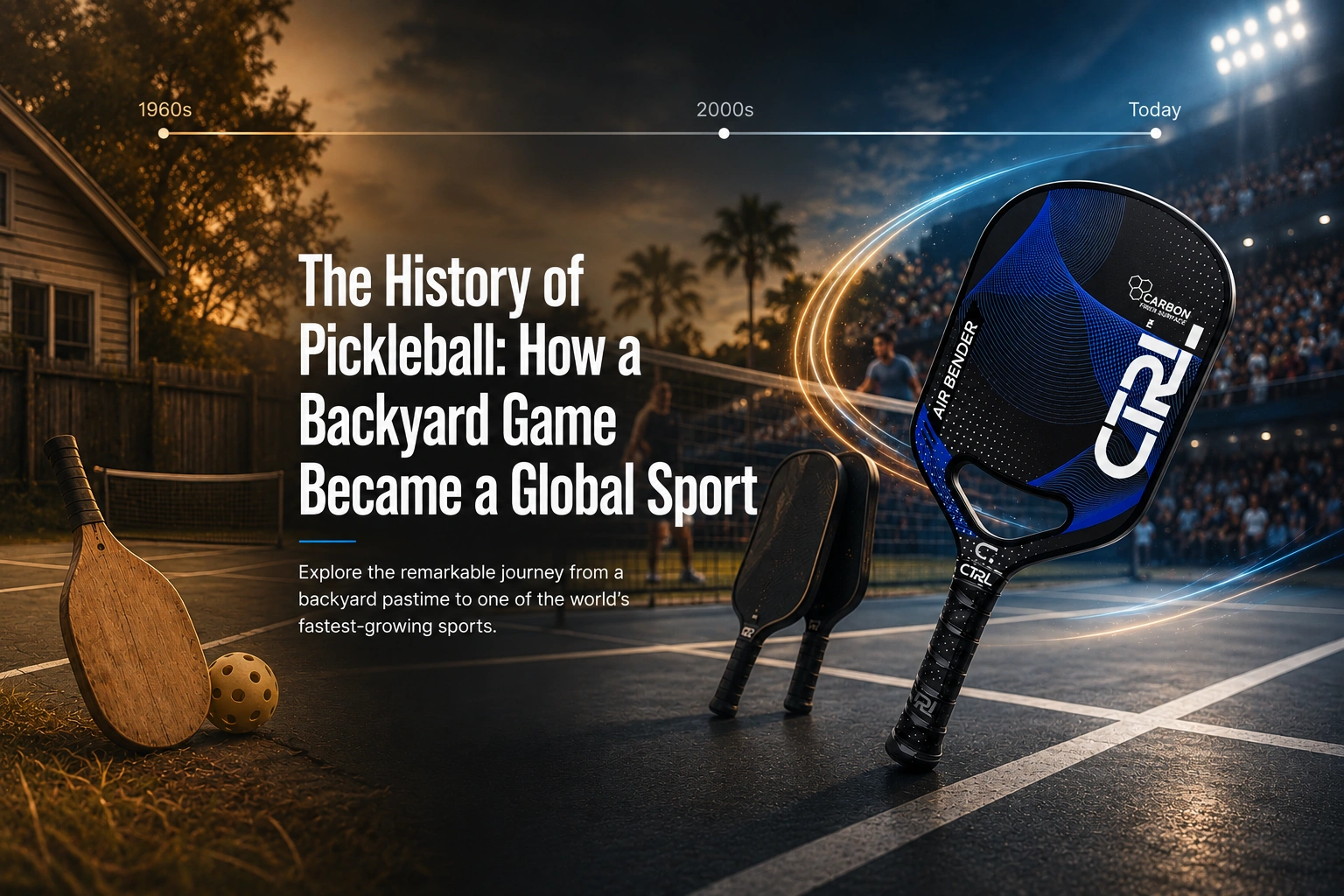

Pickleball was invented in the summer of 1965 on Bainbridge Island, Washington, by Joel Pritchard, Bill Bell, and Barney McCallum, who improvised the game using table tennis paddles, a perforated plastic ball, and a lowered badminton net. Nearly 60 years later, it's one of the fastest-growing sports in the world - including in India, where organized play has expanded rapidly since around 2022. Here's how a weekend improvisation to entertain bored kids turned into a global sport.
When was pickleball invented, and who invented it?
Pickleball was invented on a Saturday afternoon in the summer of 1965, at Joel Pritchard's summer home on Bainbridge Island, Washington, near Seattle. Pritchard, then a Washington State legislator who later served in the U.S. Congress and as the state's lieutenant governor, had returned from a round of golf with his friend Bill Bell, a businessman. They found their families bored and restless, and tried to set up a game of badminton on the property's old backyard court - but no one could find a complete set of rackets or a shuttlecock.
Rather than give up, they improvised. They grabbed a pair of table tennis paddles and a perforated plastic ball, and lowered the badminton net to roughly hip height. The following weekend, their neighbor Barney McCallum - a businessman who lived nearby - joined in, and the three men began refining the rules together. Their goal from the start was simple: create a game the whole family, regardless of age or athletic ability, could play together.
Was pickleball originally meant to be a real sport?
No. It began purely as a casual, improvised family activity meant to solve a single afternoon's boredom, not a designed competitive sport. Its accessibility for all ages and skill levels - a direct product of that original family-first goal - is a big part of why it caught on so widely decades later.
Why is it called "pickleball"?
The name's origin is genuinely disputed, and it's worth understanding both accounts rather than treating either as settled fact. The version favored by Joel Pritchard's wife, Joan Pritchard, and supported by USA Pickleball's own historical research, is that she named the game after the "pickle boat" - a term from competitive rowing referring to a boat crewed with leftover oarsmen assembled from other boats, which she felt matched the improvised, mixed-and-matched nature of a game built from spare badminton, table tennis, and tennis equipment.
The far more popular but likely inaccurate story is that the game was named after the Pritchard family's dog, Pickles, who supposedly chased the ball during early games. USA Pickleball's own investigation into the claim - including interviews with people present in the 1960s and a search for records of the dog itself - found that Pickles the dog wasn't born until 1968, three years after the game had already been played and named. The Pritchard family has maintained for decades that the dog was named after the sport, not the other way around.
It's worth noting that a more recent and more disputed claim has also surfaced: some accounts suggest a couple on nearby Whidbey Island may have played a similar game with paddles and a plastic ball even earlier, in the late 1950s to early 1960s, under a different name. This remains a contested minority theory rather than an established part of the historical record, and the Bainbridge Island origin remains the version recognized by USA Pickleball and reflected in most historical sources, including the sport's Wikipedia entry.
How did pickleball evolve from a backyard game into an official sport?
Pickleball moved from a single backyard to an organized, national sport over roughly two decades, marked by a few key milestones:
- 1965 - Invented on Bainbridge Island, Washington, by Joel Pritchard, Bill Bell, and Barney McCallum
- 1967 - The first permanent pickleball court was built in the backyard of a Pritchard family friend and neighbor
- February 1968 - Pickle Ball, Inc. was formed by Pritchard and several others to promote and sell the sport, manufacturing wooden paddles and starter kits
- 1972 - The company filed its first annual report and trademarked the name "Pickle-ball" around this period
- 1975–1976 - The sport received its first national media coverage, including a mention in Tennis magazine covering "America's newest racquet sport"
- Spring 1976 - The first known tournament, billed as "The World's First Pickleball Championship," was held at the Southcenter Athletic Club in Tukwila, Washington
- 1984 - The United States Amateur Pickleball Association (USAPA) was formally organized to promote the sport nationally and published the first official rulebook
- 2003 - Pickleball was played for the first time at the Huntsman World Senior Games in Utah, expanding its reach among older competitive players
- 2022 - Washington State officially named pickleball its state sport, signed into law on the original court where the game was invented
- 2022–present - Recognized as one of the fastest-growing sports in the United States, with rapid international expansion following, including into India
What stands out across this timeline is how gradual the sport's early growth actually was - nearly two decades passed between the original 1965 backyard game and the formation of a national association in 1984. The explosive growth most players associate with pickleball today is a comparatively recent phenomenon, concentrated mostly in the last five to ten years.
How did pickleball paddles evolve from plywood to carbon fiber?
The very first pickleball "paddles" weren't paddles at all - they were borrowed table tennis paddles, which broke quickly under the more demanding gameplay the founders were developing. Joel Pritchard and Bill Bell responded by fashioning improvised wooden paddles in a nearby shed, and Barney McCallum - who proved particularly skilled at refining the equipment - began experimenting with paddle designs in his father's basement workshop in Seattle. One of his designs, known as the "M2" (McCallum 2), became a popular choice among early players and helped standardize what a pickleball paddle should look and feel like.
Solid wood and plywood paddles remained the standard for roughly the sport's first two decades, valued for durability but heavy and fatiguing over long play. As the sport grew through the 1980s and 1990s, manufacturers began experimenting with lighter composite materials - aluminum honeycomb cores with fiberglass or graphite face sheets - dramatically reducing paddle weight and improving maneuverability compared to solid wood construction.
The more recent evolution, covered in detail in our Core Materials Explained guide, has moved toward polymer honeycomb cores paired with textured carbon fiber or Kevlar face sheets - construction focused specifically on maximizing spin, control, and touch rather than just reducing weight. This modern construction era reflects how much more technically developed competitive pickleball has become compared to its backyard-improvisation origins, where the entire concept of "paddle technology" simply didn't exist yet.
How did pickleball reach India, and how fast is it growing here?
Pickleball's presence in India has expanded significantly since roughly 2022, driven largely by residential society courts converting existing badminton or tennis space, the rise of dedicated padel facilities adding pickleball lines, and growing organized play across major metros including Delhi, Mumbai, Bangalore, and Hyderabad. This mirrors, on a compressed timeline, the same pattern the sport followed in the US decades earlier - grassroots, community-level adoption preceding formal organization and national competition structures.
For a deeper look at how this growth is playing out city by city and what's driving it specifically in the Indian market.
If this history has you curious about picking up a paddle yourself, our Beginner's Guide to Choosing a Pickleball Paddle in India is the natural next stop.
What happened to the sport's three founders?
Joel Pritchard went on to a substantial political career, serving in the U.S. Congress and later as Washington State's lieutenant governor, before his death in 1997. According to his daughter, he considered pickleball among the achievements he was proudest of - not for its competitive legacy, but because of how many people it had brought together and kept active and happy over the years.
Bill Bell remained closely involved with the sport's early promotion, later serving as an early representative for Pickle Ball, Inc. as the company worked to introduce the game beyond the Pacific Northwest.
Barney McCallum is widely credited with much of the sport's technical foundation - beyond his early paddle designs, he played a significant role in helping formalize structural elements of the rules that remain central to how pickleball is played today, including concepts tied to the non-volley zone near the net.
None of the three set out to create a lasting global sport. By most accounts, their only goal that first Saturday afternoon in 1965 was solving a single afternoon of boredom for their own families - which makes the sport's eventual reach, six decades and multiple continents later, a fairly remarkable outcome from a fairly ordinary weekend.
Be Part of Pickleball's Next Chapter
From a simple backyard game in 1965 to one of the world's fastest-growing sports, pickleball has inspired millions of players across every age and skill level. Whether you're discovering the game for the first time or ready to upgrade your equipment, the right paddle can make every match more enjoyable.
Explore PlayCTRL's premium carbon fiber pickleball paddles, designed to help beginners learn with confidence and experienced players perform at their best.
Explore PlayCTRL Pickleball Paddles →