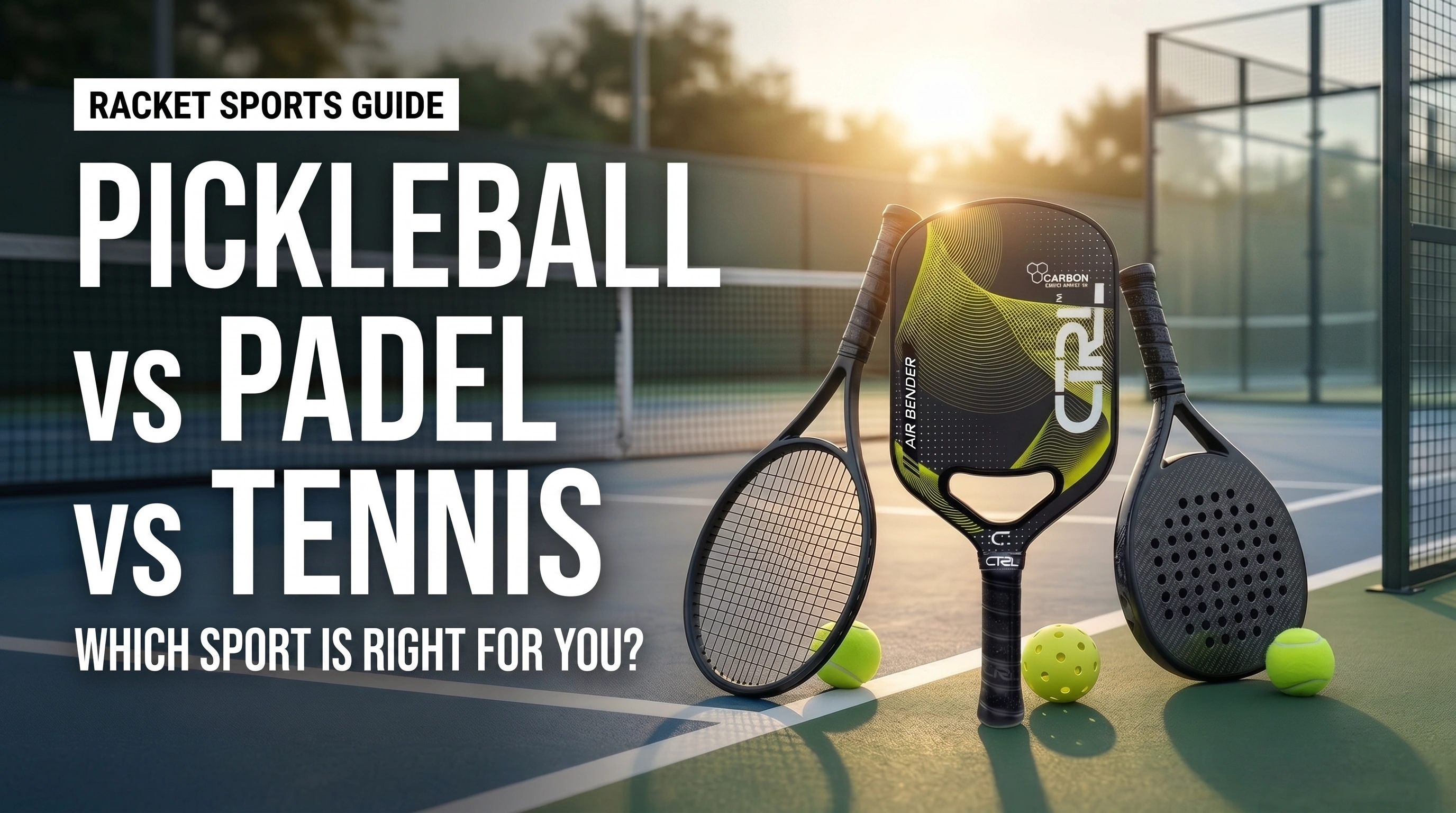
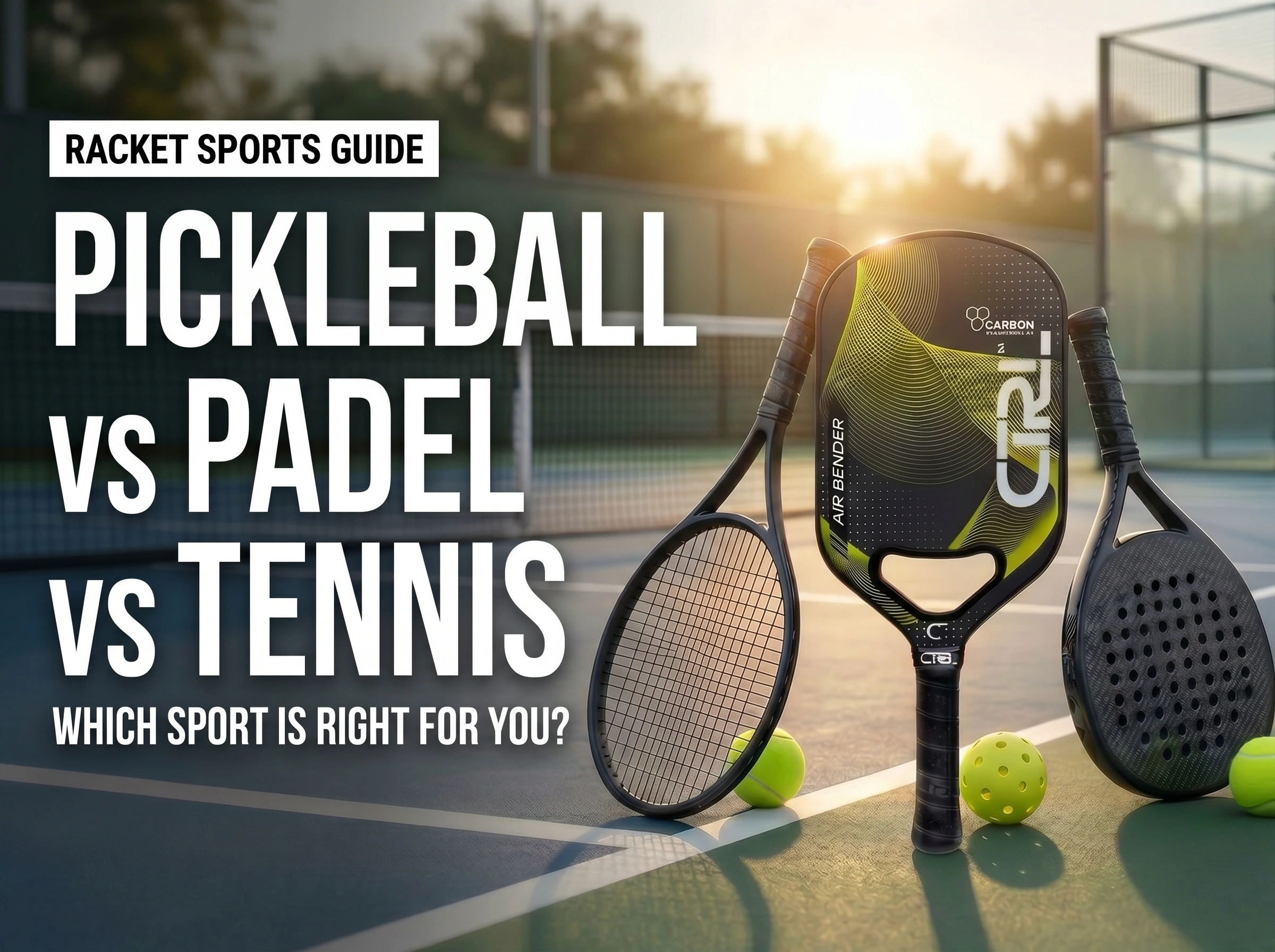
Three racket sports, three completely different games, and right now all three are growing at once in India. Whether a pickleball court has appeared near your apartment, colleagues are talking about padel at a new club, or you have meant to learn tennis properly for years, the question is the same: which one is actually worth your time, money, and energy?
This guide gives you a straight, no-agenda comparison across every dimension that matters: court size, equipment, learning curve, cost, physical demand, and availability in India. The aim is to give you enough to make the right call for your situation, not to sell you on a sport. The data does that on its own.
Quick comparison: pickleball vs padel vs tennis at a glance
If you read nothing else, read this table.
In one paragraph: pickleball has the shortest path from zero to playing a real game. Padel sits in the middle, more complex than pickleball, more accessible than tennis, but hard to find in India. Tennis has the highest barrier to entry and the highest long-term skill ceiling. All three are genuinely enjoyable. The one you should start with depends on what you are optimising for.
What is pickleball, and why is it growing so fast?
Pickleball was invented in 1965 in Washington State, using ping-pong paddles, a perforated plastic ball, and a badminton court. It has since become one of the fastest-growing sports in the world.
The court is small, roughly a third the size of a tennis court, so it fits into urban spaces that could never hold a full tennis facility: rooftops, parking lots, repurposed basketball courts, and building compounds across Indian metros. The solid paddle and underhand serve lower the technical barrier sharply, and the non-volley zone rule forces strategic, touch-based play that keeps the game interesting at every level. It is age-agnostic too: a 60-year-old and a 25-year-old can have a competitive game, which is rare in sport.
In India, active pickleball participation has jumped about 150%, from roughly 60,000 players in 2024 to more than 150,000 in 2026, according to industry reporting. Dedicated courts have grown six-fold, from around 200 in early 2024 to more than 1,200 by early 2026, and the Indian market is projected to reach ₹7,500 crore by 2030. The traction is concentrated in Delhi, Mumbai, Bengaluru, Hyderabad, Pune, and Chennai.
What is padel? The sport taking Europe by storm
Padel was invented in 1969 in Acapulco, Mexico, by Enrique Corcuera as a squash-style adaptation for his home court. It spread through Spain and Argentina before becoming a mainstream European sport over the past decade.
The court is enclosed by glass walls and wire mesh, and those walls are live: playing the ball off the back glass is a standard, strategic shot. That wall mechanic is what makes padel fundamentally different from every other racket sport. It produces longer rallies, rewards positioning, and is intensely social, since doubles is the standard format and the enclosed space keeps everyone close and involved.
Padel has grown from around 12 million players globally in 2014 to roughly 30 million by the end of 2024, and the International Padel Federation's 2025 report puts the figure past 35 million. The pace of building is just as striking: the Playtomic and PwC Global Padel Report found that 3,282 new clubs opened in 2024 alone, roughly one new club every two and a half hours.
In India, padel is growing but constrained by infrastructure. An enclosed glass-and-mesh court costs far more to build than a converted concrete pickleball court, so as of 2026 dedicated padel facilities are concentrated in premium clubs in Mumbai, Delhi, and Bengaluru. If you live near one, padel is well worth trying. If not, you will be waiting for the infrastructure to catch up.
What is tennis? The classic that started it all
Tennis traces its modern origins to Victorian England, with Wimbledon's first championship in 1877. It is now one of the most globally distributed sports, with courts in nearly every country and an estimated one billion fans worldwide, which makes it the fourth most popular sport by fan count. Around 106 million people play it globally, a figure up roughly a quarter since 2019.
In India, a deep club culture built over decades, strengthened by the Leander Paes and Mahesh Bhupathi era, means tennis infrastructure exists in most cities. The challenge is access: memberships are expensive, court hire is costly, and the time to reach a competent level is significant. Tennis also has the highest skill ceiling of the three. The overhand serve, full swing mechanics, singles footwork, and court coverage all demand sustained development. That is not a reason to avoid tennis, it is a reason to be clear-eyed about the commitment before you start.
Pickleball vs tennis: key differences
These two draw the most comparison searches, partly because tennis players are often the first to try pickleball, and partly because the equipment looks superficially similar.
The courts differ greatly in scale. A pickleball court is about a third the size, which changes positioning, movement, and rally dynamics, and the non-volley zone forces players to work the kitchen line rather than dominate from the baseline. The biggest mechanical difference is the serve: tennis needs an overhand serve that takes weeks to make consistent, while pickleball uses an underhand serve most beginners can place reliably in their first session. Scoring is simpler too, with rally scoring to 11, win by two, usually best of three.
For tennis players considering pickleball, your footwork, hand-eye coordination, and competitive instincts transfer directly. What does not transfer is the full swing. Pickleball rewards a compact stroke with a backswing no further than your hip, and players who bring a full tennis swing make more unforced errors than beginners until they consciously shorten it.
Pickleball vs padel: how they compare
These two get compared a lot because both use solid-faced equipment, are doubles-friendly, and are growing in markets where tennis has plateaued.
The fundamental difference is the court. Pickleball is played on an open court with no walls and the same dimensions everywhere. Padel's enclosed court makes wall play a core mechanic, so a ball off the back glass is in play, whereas in pickleball a ball past the baseline is out. The equipment differs more than it looks: a pickleball paddle is lighter and more compact than a padel racket, and the balls are completely different, a hard perforated plastic ball versus a depressurised tennis ball with a softer, more predictable bounce.
In India the accessibility gap is decisive. Pickleball has more than 1,200 dedicated courts as of 2026, while padel facilities remain concentrated in a handful of premium metro clubs. If you choose based on what you can actually play this week in most Indian cities, pickleball is the practical answer.
Which sport is easiest to learn?
Pickleball has the shortest path from zero to a real, enjoyable game, and it is not close. Most beginners sustain a genuine rally in their first session, the rules fit on a page, the court is small enough that positioning errors are obvious, and the underhand serve removes tennis's biggest technical barrier. The non-volley zone makes beginners think tactically from day one.
Padel's wall mechanics add complexity that takes several sessions to read instinctively, but the smaller court and social doubles format mean partners cover for gaps and rallies last longer than in tennis, so most padel beginners feel competent within two to four weeks. Tennis is the most demanding to start: the overhand serve takes real practice, and full-court coverage demands fitness and footwork, so casual competence usually takes several weeks to a few months of regular play.
Easier to learn does not mean a lower ceiling. Competitive pickleball is technically sophisticated and physically demanding. The advantage is that you can enjoy the game while you develop, rather than grinding fundamentals for months before it becomes fun.
Which racket sport is growing fastest in India?
By every measurable metric in 2026, pickleball is growing faster in India than any other racket sport. Participation is up about 150%, courts have grown six-fold past 1,200, and the market is projected at ₹7,500 crore by 2030, one of the highest pickleball growth rates anywhere in the world.
Padel is growing too, but from a much smaller base, and the cost of building enclosed courts limits how fast it can spread beyond premium clubs. Padel in India in 2026 is roughly where pickleball was in 2022: real, but available to a narrow slice of the population in specific cities. Tennis has a deep established base but is plateauing at the recreational club level, held back by court-access costs, coaching investment, and the time needed to reach competence in urban markets where people have less time and more options than a decade ago.
Which sport should you start with?
Four profiles, four honest recommendations.
If you want to go from zero to a real game in the shortest time, start with pickleball. You will be in a genuine rally in your first session, and the rules, equipment, and court all favour beginners.
If you play tennis and want a lower-impact alternative, start with pickleball. Your footwork, hand-eye coordination, and competitive mindset transfer directly. The main adjustment is the compact swing, which most tennis players absorb within two to three sessions.
If you want a premium, club-based social experience and live near a padel facility, try padel. The social format, enclosed court, and wall mechanics create something neither pickleball nor tennis replicates. The caveat is simply that you need to live near a court.
If you want the highest skill ceiling and are ready to invest months rather than sessions, start tennis. The depth of technique, the physical demand, and the competitive structure at every level make it rewarding in ways that take longer to reach but are worth it for the right player.
For most people reading this in India in 2026, especially urban players who want a sport they can play this week, develop over months, and compete in within a year, pickleball is the honest answer. Courts now exist in most major cities, and all you need to start is a paddle, a set of outdoor balls, and court shoes. No stringing, no mandatory membership at many venues, and no months of lessons before the game is fun.
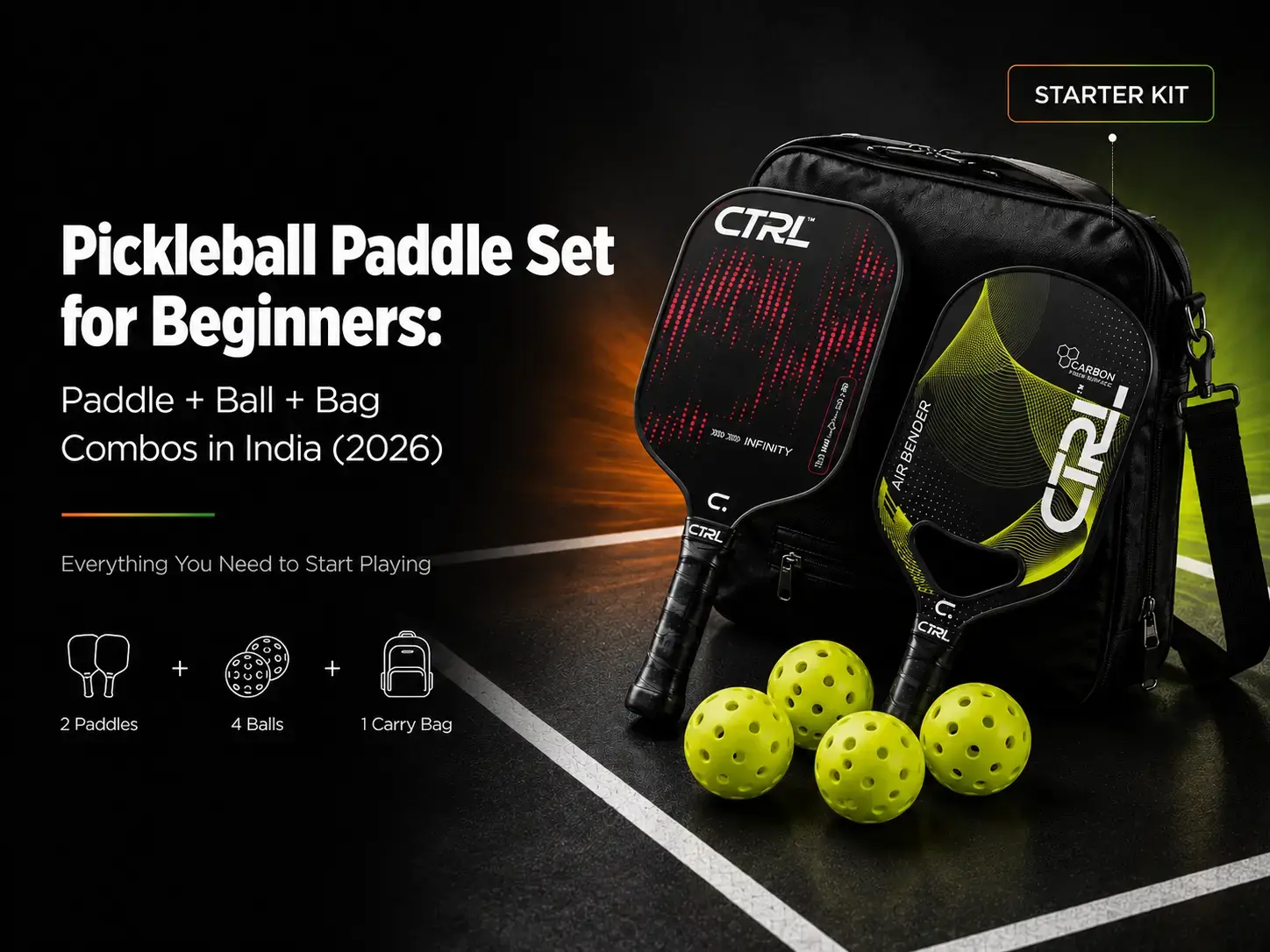
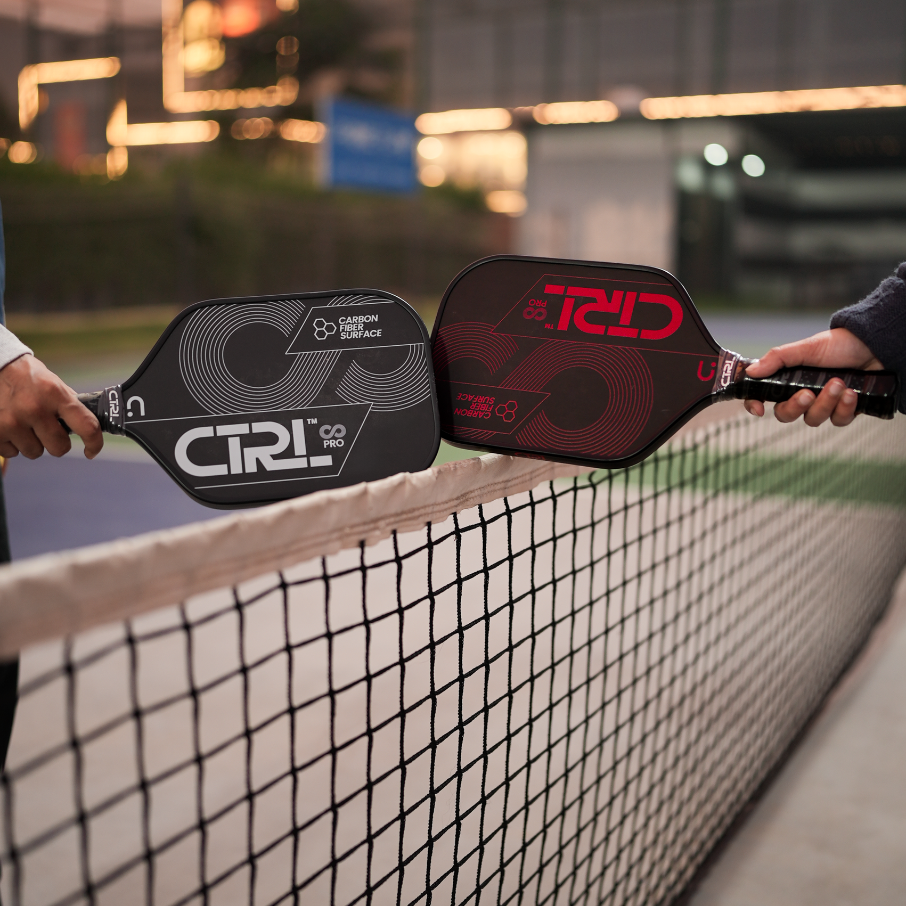
If pickleball is where you are headed, CTRL is India's premium paddle brand, designed in the USA and built for Indian courts and conditions, with three paddles for three player types: the Infinity for balanced all-round play, the Infinity Pro for competitive consistency, and the Airbender for spin-dominant, aggressive players. If you are choosing your first paddle, the best pickleball paddle under ₹10,000 guide walks through which fits your game.
The right sport is the one you will actually play
All three sports are worth playing. The honest difference is how quickly each becomes enjoyable, how accessible it is in Indian cities right now, and how much time you need to invest before it rewards you. For most people in India in 2026, pickleball answers all three better than the alternatives, which is why it is growing the way it is